Resources & Insights
Common Mistakes to Avoid During Warehouse Development
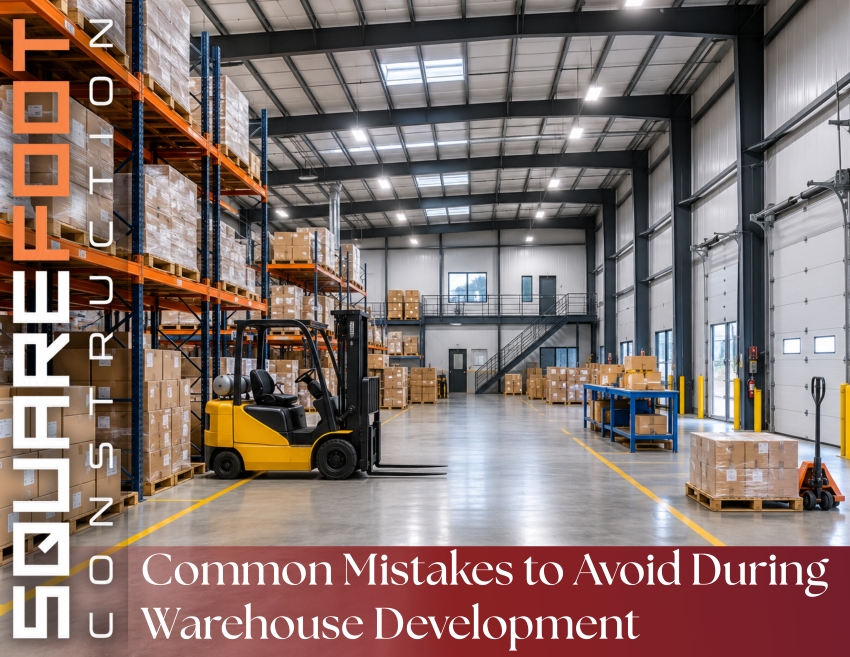
Warehouse development is a major investment that impacts operational efficiency, storage capacity, employee productivity, and long-term profitability. Whether you're planning a new warehouse construction project, expanding an existing facility, or developing a distribution center, avoiding common mistakes during the planning and construction phases can save significant time and money.
Many businesses focus primarily on square footage and construction costs, only to discover later that poor planning creates operational bottlenecks, higher maintenance expenses, and limited room for growth. Understanding these challenges before breaking ground can help ensure a successful warehouse development project.
Why Proper Warehouse Planning Matters
The demand for modern warehouse facilities continues to grow as e-commerce, manufacturing, logistics, and supply chain operations expand throughout the United States. Today's warehouses must do more than simply store products; they need to support efficient inventory management, loading and unloading operations, employee workflows, automation systems, and future business growth.
A well-designed warehouse can reduce operating expenses, improve productivity, and increase storage capacity without requiring costly future renovations.
Mistake #1: Choosing the Wrong Site Location
Location remains one of the most critical factors in warehouse development. A poorly selected site can increase transportation costs, reduce delivery efficiency, and create challenges for employees and suppliers.
Consider These Factors Before Selecting a Site:
- Proximity to major highways and freight corridors
- Access to transportation networks
- Labor availability
- Utility capacity
- Local zoning requirements
- Future development plans in the area
- Truck accessibility and traffic patterns
Businesses that prioritize convenience over logistics often experience higher transportation costs and slower distribution performance over time.
Mistake #2: Underestimating Future Growth
One of the most expensive warehouse planning mistakes is designing a facility only for current needs.
Business growth, increased inventory levels, new product lines, and evolving supply chain requirements can quickly make a warehouse feel undersized.
Growth Planning Checklist
| Planning Area | Recommended Strategy |
|---|---|
| Storage Capacity | Design for 20-30% future growth |
| Dock Doors | Allow room for additional loading positions |
| Office Space | Leave flexibility for expansion |
| Parking Areas | Accommodate future employees and fleet vehicles |
| Utilities | Size infrastructure for future demands |
Warehouse expansion projects are often significantly more expensive than incorporating growth opportunities during initial construction.
Mistake #3: Poor Warehouse Layout Design
A warehouse's layout directly impacts operational efficiency. Poorly designed facilities often experience:
- Congested aisles
- Slow picking operations
- Increased forklift traffic
- Safety concerns
- Reduced inventory accessibility
Effective warehouse design should optimize:
- Product flow
- Receiving operations
- Storage zones
- Picking areas
- Packing stations
- Shipping operations
A strategic warehouse layout helps reduce labor costs while improving throughput and inventory accuracy.
Mistake #4: Ignoring Loading Dock Requirements
Loading docks are the heart of most warehouse operations. Inadequate dock planning can create delays throughout the entire supply chain.
Common Loading Dock Mistakes
- Too few dock doors
- Insufficient truck maneuvering space
- Poor traffic flow design
- Lack of dock equipment planning
- Limited future expansion options
Distribution centers and logistics facilities should carefully evaluate shipping volume forecasts before finalizing dock configurations.
Mistake #5: Failing to Consider Automation
Warehouse automation continues to reshape industrial facilities. Even if automation is not part of the current project scope, facilities should be designed to accommodate future upgrades.
Potential future systems include:
- Automated storage and retrieval systems (ASRS)
- Conveyor systems
- Robotics
- Smart inventory tracking
- Automated picking technology
Planning for automation during warehouse construction can prevent expensive retrofits later.
Mistake #6: Overlooking Employee Workspaces
Warehouse employees play a critical role in operational success. Yet many warehouse developments focus entirely on storage and logistics while neglecting employee comfort and productivity.
Modern warehouse facilities should include:
- Comfortable office areas
- Break rooms
- Restrooms
- Training spaces
- Proper lighting
- Climate-controlled work areas
Employee-focused design can improve retention, productivity, and workplace safety.
Mistake #7: Insufficient Electrical and Utility Planning
As warehouses become more technology-driven, utility demands continue to increase.
Utility Systems That Require Early Planning
| System | Impact on Operations |
|---|---|
| Electrical Service | Equipment, automation, charging stations |
| HVAC Systems | Employee comfort and product protection |
| Data Infrastructure | Inventory management and warehouse systems |
| Fire Protection | Safety and code compliance |
| Lighting Systems | Productivity and energy efficiency |
Insufficient utility infrastructure can lead to costly modifications after occupancy.
Mistake #8: Prioritizing Lowest Construction Cost Over Long-Term Value
Many developers focus solely on reducing initial warehouse construction costs. While controlling budgets is important, selecting the lowest-cost solution can increase operating expenses over the life of the facility.
Examples include:
- Low-efficiency HVAC systems
- Poor insulation
- Inadequate lighting
- Inferior flooring systems
- Limited dock equipment
Value engineering should focus on maximizing long-term return on investment rather than simply reducing upfront costs.
Mistake #9: Neglecting Warehouse Safety Design
Warehouse safety should be incorporated into the design phase rather than added later.
Important safety considerations include:
- Pedestrian pathways
- Forklift traffic separation
- Emergency exits
- Fire suppression systems
- Proper warehouse lighting
- Safety barriers and guardrails
A safer facility can reduce accidents, improve productivity, and lower liability risks.
Mistake #10: Hiring Contractors Without Warehouse Experience
Warehouse construction requires specialized expertise that differs significantly from office, retail, or hospitality projects.
An experienced warehouse contractor understands:
- Industrial building systems
- Loading dock construction
- Material handling requirements
- Distribution center workflows
- Industrial code compliance
- Logistics facility design
Selecting the right construction partner can help avoid costly delays, budget overruns, and operational inefficiencies.
Key Warehouse Development Priorities
Successful warehouse development projects focus on balancing construction costs with long-term operational performance.
The most effective warehouse facilities are designed around:
- Efficient warehouse layout design
- Future growth planning
- Loading dock functionality
- Employee productivity
- Automation readiness
- Energy efficiency
- Safety and compliance
- Supply chain optimization
Final Thoughts
Warehouse development is far more complex than constructing a large storage building. Every design decision impacts operational efficiency, inventory management, transportation costs, employee productivity, and future scalability.
By avoiding these common warehouse development mistakes, businesses can create facilities that support long-term growth while maximizing return on investment. Whether you're planning a warehouse expansion, distribution center construction project, or new industrial warehouse development, strategic planning and experienced construction guidance are essential to achieving long-term success.