Resources & Insights
Truck Stop Site Selection: What Makes a Location Successful?
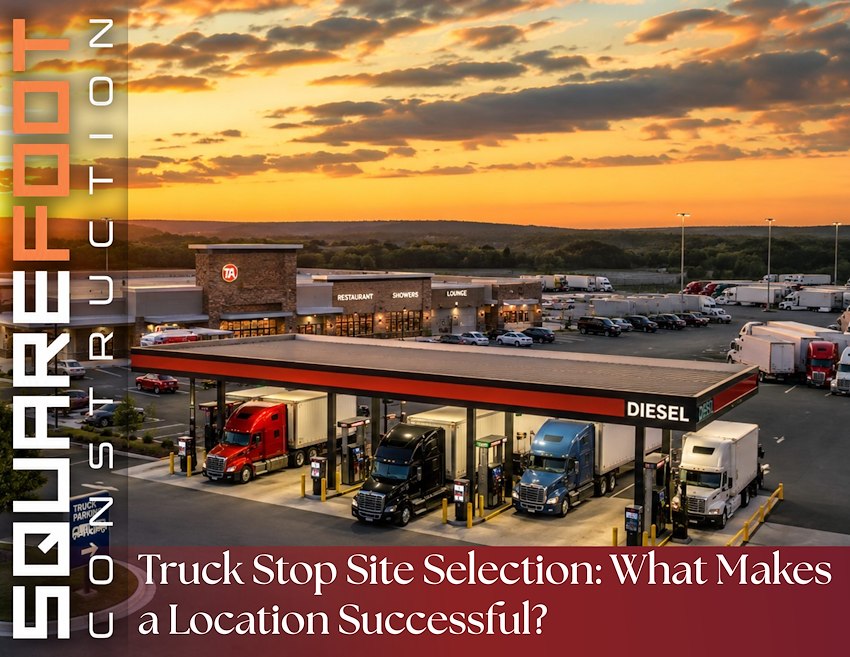
The success of a truck stop begins with choosing the right location. Whether you're planning a new travel center, diesel fueling station, or truck parking facility, site selection can have a major impact on truck traffic, fuel sales, parking utilization, and long-term profitability.
A well-positioned interstate truck stop can serve thousands of commercial drivers each day, while a poorly located facility may struggle to attract consistent traffic. Before investing in a new truck stop, developers and operators should evaluate freight corridors, truck traffic counts, parking demand, local zoning requirements, utility availability, and future growth opportunities.
Understanding these factors can help maximize revenue while creating a truck stop that serves both the trucking industry and surrounding communities.
Why Site Selection Matters
Truck stops serve as critical infrastructure within the transportation industry. Unlike many commercial developments that rely on local customers, truck stops depend heavily on regional and interstate traffic patterns. Drivers need reliable locations to refuel, rest, park, eat, and comply with Hours of Service regulations.
A poor site selection can limit visibility, reduce customer traffic, increase development costs, and create operational challenges. Conversely, a well-positioned location can become a preferred stop for drivers traveling through major freight corridors.
When evaluating land for truck stop development, several key factors should be considered before moving forward with design, permitting, and construction.
Interstate Access and Highway Visibility
One of the most important characteristics of a successful truck stop is convenient access to a major highway or interstate. Commercial drivers prioritize locations that allow them to quickly enter and exit without significant detours. Sites located directly off major interstate exits often receive substantially more traffic than those located several miles away.
Visibility is equally important. Drivers frequently make fueling and parking decisions based on what they can easily see from the road. Properties with unobstructed views from the highway, clear signage opportunities, and sufficient distance for drivers to react and exit safely typically perform better than sites hidden behind other commercial developments.
Developers should also evaluate future transportation plans in the area. Highway widening projects, new interchanges, industrial growth, and roadway improvements can significantly increase traffic volumes over time and enhance the value of a truck stop location.
Beyond immediate access, truck-friendly roadway design should be considered. Adequate turning radii, wide entrances, multiple access points, and safe circulation patterns all contribute to a better experience for commercial vehicles.
Traffic Counts and Commercial Vehicle Volume
Traffic counts provide valuable insight into the potential demand for a truck stop. However, total vehicle volume alone does not tell the entire story. The percentage of commercial trucks traveling through a corridor is often a more important metric than overall traffic numbers.
A location with moderate traffic but a high concentration of freight vehicles may generate more fuel sales and parking demand than a site with higher passenger vehicle traffic. Developers should review Average Annual Daily Traffic (AADT) reports, truck traffic studies, and transportation data to understand the composition of traffic in the area.
Traffic Evaluation Example
| Metric | Site A | Site B |
|---|---|---|
| Average Daily Traffic | 80,000 Vehicles | 55,000 Vehicles |
| Commercial Truck Percentage | 8% | 22% |
| Estimated Trucks Per Day | 6,400 | 12,100 |
| Long-Term Truck Stop Potential | Moderate | High |
Although Site A experiences higher overall traffic, Site B accommodates nearly twice the number of commercial trucks, making it the stronger long-term opportunity.
Freight Corridors and Logistics Activity
The most successful truck stops are often located along established freight corridors connecting manufacturing centers, distribution hubs, ports, rail facilities, and major population centers.
- Distribution centers
- Industrial parks
- Manufacturing facilities
- Warehousing operations
- Freight terminals
- Intermodal transportation hubs
- Regional logistics campuses
As e-commerce continues to expand, distribution networks require larger volumes of truck transportation, increasing demand for truck stop facilities near warehouse developments and logistics centers.
Driver Demand and Parking Availability
Truck parking shortages remain one of the biggest challenges facing the transportation industry. Facilities that provide ample parking often become preferred destinations for drivers.
Popular truck stop amenities include:
- High-flow diesel fueling stations
- DEF dispensing systems
- Overnight truck parking
- Driver showers
- Laundry facilities
- Convenience stores
- Quick-service restaurants
- Coffee stations
- Driver lounges
- Wi-Fi access
- Fleet fueling services
Zoning and Regulatory Considerations
Before purchasing property, developers should thoroughly investigate local zoning regulations and land-use requirements. Truck stop developments typically require approvals related to fuel sales, commercial vehicle parking, signage, environmental compliance, and traffic impacts.
Due diligence should include reviewing:
- Zoning classifications
- Permitted land uses
- Conditional use requirements
- Environmental regulations
- Signage restrictions
- Setback requirements
- Access management standards
- Stormwater regulations
Utility Infrastructure and Site Development Costs
Utility availability can significantly affect construction budgets and timelines. Developers should verify access to essential infrastructure before moving forward.
- Water service
- Sewer service
- Electrical capacity
- Natural gas availability
- Telecommunications infrastructure
- Storm drainage systems
Truck Stop Site Selection Checklist
| Evaluation Factor | Importance |
|---|---|
| Interstate Access | Critical |
| Highway Visibility | Critical |
| Commercial Truck Volume | Critical |
| Freight Corridor Proximity | High |
| Truck Parking Demand | High |
| Zoning Compatibility | High |
| Water and Sewer Availability | High |
| Electrical Capacity | High |
| Future Growth Potential | High |
| Nearby Industrial Development | High |
Future Growth Potential
Developers should evaluate not only current traffic conditions but also future industrial expansion, population growth, infrastructure investment, and planned transportation improvements that could increase long-term demand.
Conclusion
Successful truck stop development requires more than available land near a highway. The best locations combine strong truck traffic counts, convenient interstate access, growing freight activity, sufficient truck parking demand, and reliable utility infrastructure.
By carefully evaluating these factors before purchasing property, truck stop operators and investors can identify locations that support long-term growth and profitability. Whether the project includes a travel plaza, diesel fueling station, fleet fueling facility, or large-scale commercial truck parking, selecting the right location is the foundation of a successful truck stop operation.