Resources & Insights
How to Renovate a Dental Office Without Closing Your Practice
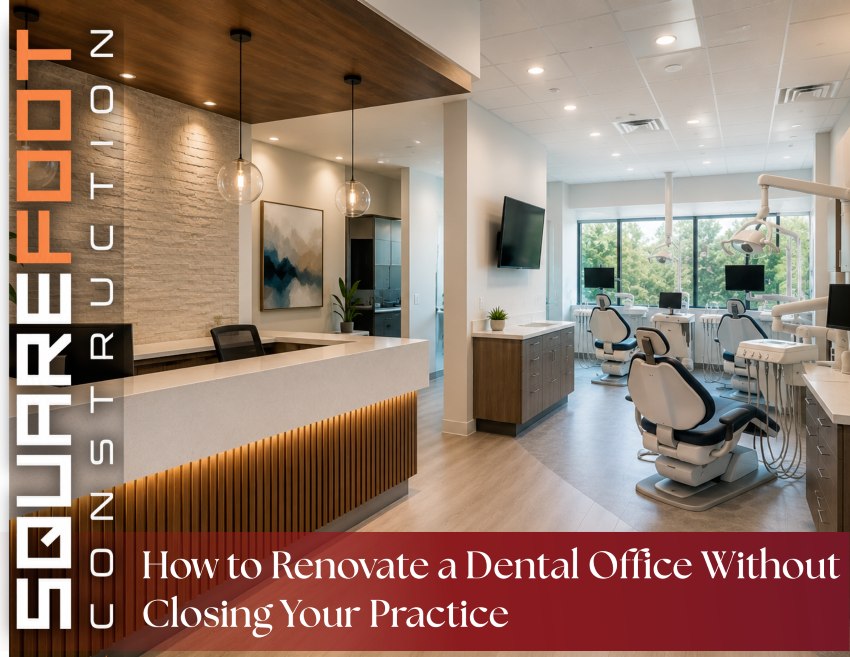

For most dentists, the thought of renovating their practice comes with one overwhelming concern:
"How can we remodel our office without interrupting patient care or losing revenue?"
Whether you're modernizing operatories, expanding treatment rooms, upgrading your reception area, or completely transforming an outdated dental office, shutting down your practice for weeks isn't a realistic option.
Every day your office is closed means cancelled appointments, delayed treatments, reduced cash flow, and frustrated patients.
The good news is that most dental office renovations can be completed while your practice remains open when the project is carefully planned and managed by an experienced commercial construction company.
At Squarefoot Construction, we understand that your office isn't just a building—it's an active healthcare environment where patients expect a clean, safe, and professional experience every day. That's why occupied renovations require a completely different approach than a standard commercial remodel.
In this guide, you'll learn exactly how successful dental practices renovate their offices while continuing to operate, the mistakes to avoid, and how choosing the right contractor can make all the difference.
Why Closing Your Dental Practice Is More Expensive Than You Think
Many dentists underestimate the true cost of temporarily closing their practice during construction.
The obvious loss is revenue from cancelled appointments, but there are several hidden costs that can quickly add up, including:
- Staff payroll while productivity decreases
- Patient cancellations and rescheduling
- Emergency patients seeking another provider
- Delayed treatment plans
- Negative patient experiences
- Reduced referrals
- Marketing disruptions
- Scheduling backlogs after reopening
For established practices with busy schedules, even a few days of downtime can have a lasting impact on operations.
That is why many dentists specifically search for dental office renovation contractors who specialize in occupied renovations rather than contractors who simply remodel commercial spaces.
Can You Really Renovate a Dental Office Without Closing?
The answer is yes, and many successful dental practices do it every year.
The key isn't simply working faster.
It's developing a construction plan that allows your office to remain functional throughout every phase of the project.
An experienced contractor considers:
- Patient flow
- Staff workflow
- Equipment accessibility
- Utility interruptions
- Noise control
- Dust containment
- Safety barriers
- Infection prevention
- Scheduling around office hours
Rather than treating the project like a normal office renovation, every decision is made around protecting your ability to continue seeing patients.
Common Dental Office Renovations That Can Be Completed While You're Open
Not every renovation requires shutting down the practice.
Many improvements can be completed in carefully planned phases.
| Renovation Type | Can Practice Stay Open? | Typical Disruption |
|---|---|---|
| Reception remodel | Yes | Low |
| Waiting room renovation | Yes | Low |
| New flooring | Yes (phased) | Moderate |
| Painting | Yes | Low |
| New cabinetry | Yes | Moderate |
| Operatories remodel | Yes (one room at a time) | Moderate |
| Lighting upgrades | Yes | Low |
| Restroom renovation | Yes | Low |
| Staff lounge remodel | Yes | Minimal |
| Complete office renovation | Yes (with phased construction) | Moderate |
The larger the project, the more important it becomes to develop a detailed phasing strategy before construction begins.
Step 1: Create a Phased Construction Plan
One of the biggest mistakes contractors make is attempting to renovate the entire office simultaneously.
Instead, experienced dental office renovation contractors divide projects into phases.
For example:
Phase One
- Reception area
- Front desk
- Waiting room
- Administrative offices
Phase Two
- Operatories (one at a time)
- Sterilization area
- Hallways
Phase Three
- Break room
- Storage rooms
- Restrooms
- Finishing details
This allows portions of the office to remain fully operational while work progresses elsewhere.
Patients often don't even realize construction is taking place beyond the temporary walls.
Step 2: Schedule Construction Around Patient Hours
One of the easiest ways to reduce disruption is adjusting construction schedules.
Many contractors perform louder work during:
- Evenings
- Weekends
- Holidays
- Early mornings
- Scheduled office closures
Activities such as:
- Concrete cutting
- Demolition
- Steel work
- Core drilling
- Utility shutdowns
can often be completed when patients aren't present.
Meanwhile, quieter work, including painting, cabinetry installation, finish carpentry, and trim work, can continue during regular office hours.
Step 3: Keep Patients Safe During Construction
Healthcare environments require a higher level of cleanliness than traditional commercial spaces.
Professional contractors use specialized safety measures including:
- Dust containment systems
- Plastic isolation barriers
- Temporary walls
- HEPA air filtration
- Negative air machines when necessary
- Daily cleaning procedures
- Separate construction entrances
- Clearly marked patient walkways
These practices help maintain a safe environment while reducing the impact of construction on patients and staff.
Protecting Your Dental Equipment During Renovation
Dental equipment represents one of the largest investments inside your practice.
Items such as:
- Dental chairs
- Digital X-ray systems
- CBCT machines
- Compressors
- Vacuum systems
- Sterilization equipment
- Imaging rooms
- Computer networks
require careful coordination before construction begins.
A qualified contractor will work alongside your equipment vendors to ensure systems remain protected and operational whenever possible.
Communication Keeps Patients Comfortable
Patients are generally understanding when they know improvements are being made.
Instead of surprising patients with construction activity, notify them beforehand through:
- Appointment reminders
- Email newsletters
- Social media
- Your website
- Office signage
- Front desk communication
Simple messaging like:
"We're improving our office to better serve you while continuing normal appointments."
helps reassure patients that their experience remains a priority.
What Dentists Should Expect During an Occupied Renovation
While every project is different, there may be temporary adjustments such as:
- Alternate entrances
- Temporary waiting areas
- Modified patient traffic flow
- Short-term operatory closures
- Limited parking during deliveries
These inconveniences are typically short-lived and are outweighed by the long-term benefits of a modernized practice.
Biggest Mistakes Dentists Make During a Renovation
Many renovation delays are caused long before construction even begins.
Here are some of the most common mistakes:
| Mistake | Potential Impact |
|---|---|
| Hiring a contractor without healthcare experience | Increased disruptions and scheduling issues |
| Renovating every operatory at once | Lost production and cancelled appointments |
| Not ordering materials early | Project delays |
| Poor communication with staff | Scheduling confusion |
| Ignoring patient communication | Lower patient satisfaction |
| No contingency plan | Unexpected downtime |
| Underestimating equipment coordination | Expensive delays |
| Choosing the lowest bid without evaluating experience | Higher long-term costs |
Avoiding these mistakes can save significant time, money, and frustration.
Signs It's Time to Renovate Your Dental Office
Many dentists delay renovations until problems become impossible to ignore.
You may be ready for a remodel if your office has:
- Outdated finishes
- Poor lighting
- Worn flooring
- Inefficient operatories
- Limited storage
- Crowded waiting rooms
- Aging cabinetry
- Inefficient workflow
- Difficulty accommodating new technology
A renovation isn't just about appearance—it can improve efficiency, patient satisfaction, and staff productivity.
How Long Does a Dental Office Renovation Take?
Every project is unique.
Factors that influence construction schedules include:
- Office size
- Scope of work
- Material availability
- Permit approvals
- Equipment installation
- Number of renovated operatories
- Mechanical and electrical upgrades
An experienced contractor develops a realistic timeline that balances speed with minimal disruption to your daily operations.
Why Choosing the Right Contractor Matters
Not every commercial contractor understands the challenges of working inside an active dental practice.
Dental office renovations require experience with:
- Occupied healthcare environments
- Phased scheduling
- Infection control
- Equipment coordination
- Utility planning
- Noise management
- Patient safety
- Staff workflow
Choosing a contractor experienced in occupied renovations helps reduce stress, avoid unnecessary downtime, and keep your practice running smoothly from start to finish.
Frequently Asked Questions
Can a dental office stay open during renovation?
Yes. Many dental practices continue seeing patients through phased construction, careful scheduling, and temporary barriers that separate construction zones from active treatment areas.
Will patients be bothered by construction?
Most disruptions can be minimized by scheduling noisy work outside patient hours, maintaining clean pathways, and keeping patients informed throughout the project.
How do contractors control dust during a dental office renovation?
Professional contractors use temporary walls, HEPA filtration systems, negative air machines, dust barriers, and daily cleaning procedures to reduce dust and maintain a clean environment.
How long does a typical dental office renovation take?
The timeline depends on the size and complexity of the project. Smaller renovations may take only a few weeks, while full-office remodels can take several months. Phased scheduling allows many practices to remain operational throughout the process.
Is renovating while staying open more expensive?
Not necessarily. While phased construction requires additional planning, remaining open often helps offset costs by allowing the practice to continue generating revenue throughout the renovation.
Partner with a Contractor Who Understands Dental Practices
Renovating your dental office doesn't have to mean putting your business on hold. With the right strategy, you can modernize your space, improve patient comfort, and upgrade your workflow while continuing to provide exceptional care.
At Squarefoot Construction, we specialize in commercial renovations that are planned around your business, not the other way around. From phased construction schedules and dust containment to careful coordination around dental equipment and patient traffic, our team works to minimize disruptions while delivering high-quality results. Whether you're refreshing your reception area, renovating operatories, expanding your treatment space, or completing a full dental office remodel, we're committed to helping your practice stay productive every step of the way.
Every dental practice operates differently, which is why we take the time to understand your schedule before construction begins. Tell us about your office hours, patient volume, and any scheduling concerns, and we'll work with you to develop a renovation plan that minimizes disruptions and keeps your practice running as smoothly as possible.
Contact Squarefoot Construction today to schedule a consultation.
Together, we'll create a renovation timeline that works around your business, so you can continue caring for your patients while we transform your space.