Resources & Insights
Where Do I Even Start? A Beginner's Guide to Ground-Up Commercial Construction
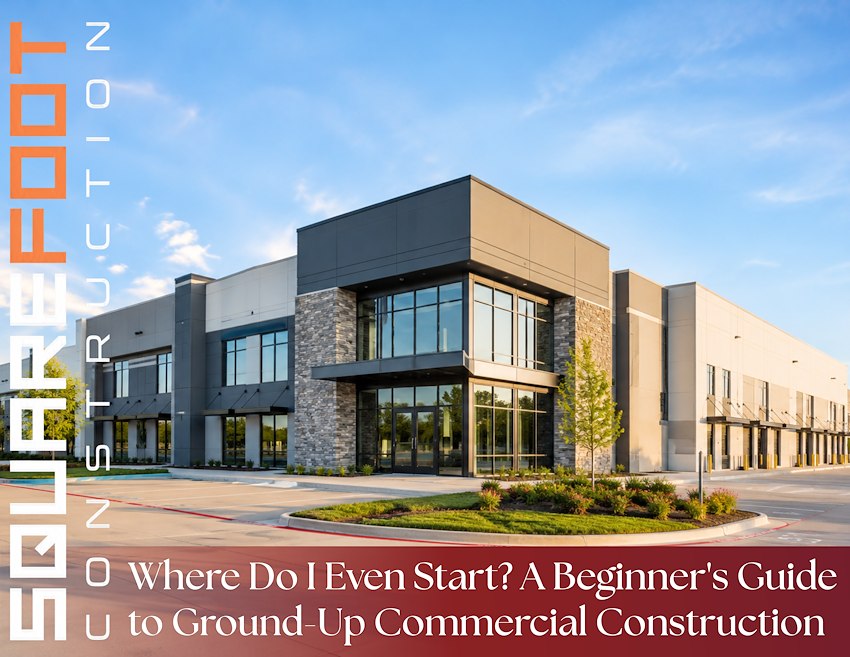
Starting a new commercial building project can feel overwhelming, especially if you've never been through the process before. Whether you're planning a retail store, office building, medical facility, industrial warehouse, hotel, or mixed-use development, it's normal to have questions about where to begin.
Many first-time developers assume construction starts when equipment arrives on-site. In reality, a successful Ground-Up Constructino project begins months before excavation starts. Careful planning, site evaluation, engineering, budgeting, permitting, and coordination all play a critical role in delivering a successful project.
This beginner's guide walks you through the major stages of Ground-Up Commercial Development while explaining the people, processes, and decisions involved before construction begins.
Step 1: Define Your Vision and Business Goals
Every successful project starts with a clear understanding of what you're building and why. Your goals will determine nearly every decision throughout the project.
Different businesses require different approaches, including:
- Ground-Up Retail Construction for shopping centers, retail stores, and convenience stores
- Ground-Up Office Construction for corporate offices and professional spaces
- Ground-Up Medical Construction for clinics, specialty practices, and healthcare providers
- Ground-Up Healthcare Facilities designed to meet strict medical standards
- Ground-Up Industrial Construction for warehouses, manufacturing, and distribution centers
- Ground-Up Data Center Development requiring specialized infrastructure
- Ground-Up Hospitality Construction for hotels and lodging facilities
- Mixed-Use Ground-Up Development combining retail, office, residential, and entertainment spaces
- Multi-Tenant Ground-Up Buildings for multiple businesses under one roof
- Franchise Ground-Up Development following national brand requirements
Some owners may also pursue Build-to-Suit Construction, where the building is specifically designed around the operational needs of one tenant, while others develop Shell Building Construction or Core and Shell Development for future tenant occupancy.
If you're developing a commercial subdivision or business park, your project may also involve Pas Site Development, Commercial Land Development, Master-Planned Community Construction, Greenfield Development Projects, or even Large-Scale Commercial Campus Development.
Before spending money on design or construction, define your building size, operational needs, future growth plans, budget, and project timeline.
Step 2: Choose the Right Property
One of the biggest mistakes first-time developers make is purchasing land before confirming that it can support the proposed proejct.
A property may appear perfect but present hidden challenges such as poor soil conditions, zoning restrictions, environmental concerns, or limited utility access.
Before buying land, your project team should evaluate:
- Property zoning
- Utility availability
- Site access
- Flood zones
- Easements
- Traffic patterns
- Environmental conditions
- Future roadway improvements
- Municipal development plans
Beginner's Site Evaluation Checklist
| Evaluation Item | Why It Matters |
|---|---|
| Zoning & Regulatory Compliance Coordination | Confirms the property allows your intended commercial use. |
| Soil Testing & Geotechnical Engineering | Determines whether the site can safely support the building foundation. |
| Environmental Compliance & Permitting | Identifies wetlands, protected areas, or environmental restrictions. |
| Utility Infrastructure Installation | Verifies access to water, sewer, electricity, gas, and communications. |
| Water, Sewer & Drainage Systems | Ensures adequate public utility capacity for your building. |
| Civil Engineering & Site Planning | Evaluates grading, access, circulation, and development feasibility. |
| Roadway & Access Drive Construction | Confirms safe entry and exit for customers, employees, and deliveries. |
| Parking Lot Construction & Paving | Determines parking requirements and traffic flow. |
| Site Lighting & Exterior Infrastructure | Improves safety, visibility, and customer experience. |
Step 3: Understand What Happens Before Construction
Many owners believe construction begins when excavators arrive on-site. In reality, a significant amount of work happens before the first shovel enters the ground.
The preconstruction phase often includes:
- Site Preparation & Grading
- Excavation & Earthwork Operations
- Stormwater Management Systems
- Erosion Control Systems
- Foundation Design & Installation
- Concrete Slab & Structural Foundations
- Gas Line Installation & Coordination
- Electrical Site Distribution Systems
- Utility Coordination & Connection Management
- Construction Sequencing & Site Logistics
Completing these activities properly reduces delays and keeps the project moving efficiently once vertical construction begins.
Step 4: Assemble the Right Team
One of the smartest decisions a first-time developer can make is building the right project team early.
Depending on the scope of your project, your team may include:
- Architects
- Civil engineers
- Structural engineers
- MEP engineers
- Surveyors
- Geotechnical consultants
- Commercial lenders
- Municipal officials
- General contractors
Working with an experienced contractor from the beginning allows for better budgeting, scheduling, constructability reviews, and coordination throughout the project.
Step 5: Understand the Building Process
After permitting and site work are complete, vertical construction begins.
This stage includes many systems working together to create a complete commercial facility.
Major Phases of Ground-Up Construction
| Construction Phase | Primary Activities |
|---|---|
| Structural Frame | Structural Steel Construction and Concrete Structure Construction create the building's structural framework. |
| Building Exterior | Exterior Envelope Systems, Roofing & Building Enclosures protect the structure from weather and improve energy performance. |
| Building Systems | MEP Systems Integration (Mechanical, Electrical, Plumbing) installs essential building utilities and life-safety systems. |
| Interior Completion | Interior Buildouts & Tenant Improvements, Space Planning & Functional Design, and Core and Shell Construction Delivery prepare the building for occupancy. |
| Project Delivery | Commissioning & Systems Testing, Quality Control & Inspection Programs, and Final Turnover & Closeout Services ensure the building is complete and operating as designed. |
Many commercial developments also utilize Fast-Track Ground-Up Construction, Phased Construction Scheduling, or Design-Build Ground-Up Projects to accelerate completion while maintaining quality.
Throughout construction, experienced teams coordinate Construction Management Services, Procurement & Materials Management, and Owner Representation & Project Coordination to keep schedules, budgets, and communication on track.
Step 6: Think Beyond Construction
A commercial building is a long-term investment, not just a construction project.
Modern developments increasingly focus on Sustainability & Energy-Efficient Construction, reducing operating costs while improving occupant comfort and environmental performance.
Owners should also consider Long-Term Facility Performance Optimization, ensuring building systems continue to operate efficiently long after construction is complete.
Many developers choose Turnkey Ground-Up Delivery Solutions, allowing one coordinated team to oversee planning, design, construction, inspections, testing, and final occupancy.
Common Questions First-Time Developers Ask
If you're planning your first commercial project, you're not alone. These are some of the most common questions owners ask before getting started:
- How much will my project cost?
- Do I buy land before hiring a contractor?
- How long will the project take?
- What permits are required?
- Can my property be developed?
- Who should I hire first?
- What happens if my site has poor soil conditions?
- How do utilities get connected?
- What causes construction delays?
- What can I do now to save money later?
Asking these questions early helps reduce uncertainty and allows your project team to create a realistic plan before construction begins.
Conclusion
Every successful commercial building starts with a well-planned foundation, not just in concrete, but in preparation. Understanding the complete process of Ground-Up Construction, from selecting the right property and evaluating site conditions to coordinating engineering, permitting, infrastructure, and vertical construction, gives first-time developers the confidence to move forward.
Whether you're planning a retail center, office building, healthcare facility, industrial warehouse, hotel, franchise location, mixed-use development, or build-to-suit facility, investing time in planning today can help prevent costly delays tomorrow. With the right team, a clear strategy, and careful coordination, your ground-up commercial project can move from an idea on paper to a successful, fully operational building.